Office Clearance in London
Professional Office Clearance for Businesses Across London

If you are planning an office move, downsizing your workspace, refurbishing a building, or closing a commercial unit, office clearance in London needs to be handled quickly, carefully, and with as little disruption as possible. In a busy city like London, space is valuable, access can be limited, and time matters. That is why many local businesses choose a specialist clearance team that understands the pace of the city and the practical challenges that come with commercial premises.
A proper office clearance is not simply about removing desks and chairs. It involves sorting items, separating reusable equipment, managing confidential paperwork, dealing with bulky furniture, and ensuring the site is left ready for its next use. For landlords, facilities managers, tenant businesses, and property agents, this service can save time, reduce stress, and help keep projects on schedule.
Whether you are clearing a single floor in a modern business centre, an entire office suite in the City, or a shared workspace in Shoreditch, the right service should be flexible enough to match your needs. Contact us today to arrange a no-obligation quote and discuss the most suitable approach for your premises.
Why London Businesses Need a Local Clearance Service

London presents very specific challenges when it comes to office removals and commercial clearances. Many properties have narrow stairwells, limited lift access, loading restrictions, controlled parking zones, and strict building management rules. Some offices are tucked inside converted terraces, others sit within managed estates, and many occupy multi-storey buildings where access must be booked in advance. A local team that already works across the capital is better placed to plan around these details.
There is also the issue of timing. In offices, every hour counts. Teams may need to clear a space after staff have left for the day, before a new tenant moves in, or between phases of a refurbishment. Local knowledge helps make these transitions smoother. It can also reduce the risk of missed collection windows, building access issues, or delays caused by transport in and around central London, the North Circular, the South Circular, or busy commuter routes.
For many clients, choosing an office clearance company in London is about convenience as much as capability. You want a team that can work around building rules, schedule efficiently, and handle different types of commercial waste responsibly. That includes old furniture, filing cabinets, IT equipment, shelving, reception units, partitioning, and general office clutter that has built up over time.
What an Office Clearance Service Can Include
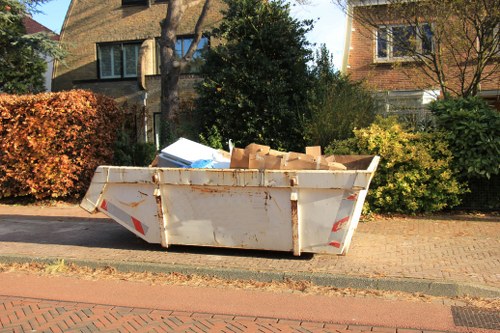
Every workplace is different, so a good service should be tailored to the layout, contents, and deadline of the job. Some offices need a light declutter before a refresh, while others require a full strip-out of furniture and equipment. An experienced team can scale the job up or down depending on the size and type of premises.
Typical office clearance services may include:
- Removal of desks, chairs, tables, shelving, and cabinets
- Clearing filing rooms, storage areas, and archive spaces
- Collection of small electrical items and IT-related waste
- Sorting items for reuse, recycling, or disposal
- Clearing reception furniture and meeting room contents
- Removal of kitchen items, breakroom furniture, and miscellaneous office clutter
- Cleaning up after the clearance so the space is left tidy and ready for the next stage
Many customers also request support with commercial office clearance where there is a need to deal with mixed items from multiple departments. This can be especially helpful when a business has grown quickly and accumulated a lot of equipment, paperwork, and stored items that no longer serve a purpose.
How the Process Usually Works

The best office clearance jobs are planned properly from the start. A structured approach keeps the process efficient and reduces disruption to staff, neighbours, and building management. The exact steps may vary depending on the size of the site, but most professional teams follow a clear process.
First, the customer explains what needs to be cleared and provides details about the property, access, lifts, parking, operating hours, and any items that require special handling. In London, these practical details matter a great deal. If the office is in a busy area such as Westminster, Canary Wharf, Kensington, Camden, or Southwark, timing and access will need careful consideration.
Next, the clearance team may arrange a visit or request photos to understand the volume of items and the layout. After that, they can suggest the most suitable plan, including the workforce needed and the likely time required. On the day of the clearance, the team removes the agreed items, separates waste types where possible, and ensures the site is left in a sensible state for the next use.
Typical stages of an office clearance
- Initial enquiry and information gathering
- Site assessment or remote review of photos and details
- Planning access, parking, and timing
- Removal of furniture, equipment, and waste
- Sorting for reuse, recycling, and disposal
- Final tidy-up and handover
Why Businesses Choose Professional Help Instead of Doing It In-House

Some offices attempt to manage clearance internally, especially when the job seems straightforward. However, in practice, a DIY approach can become time-consuming and expensive once you factor in staff time, transport, heavy lifting, access issues, and disposal requirements. Office furniture is often bulky and awkward, and older items can be difficult to dismantle or carry safely through tight corridors and stairwells.
Professional clearance teams bring the right equipment, enough manpower, and practical experience. That can make a major difference in environments where there are valuable floors, glass partitions, shared lifts, or reception areas that must be protected during removal. It also reduces the chance of injury or damage while saving your staff from spending valuable hours on manual lifting.
Another major advantage is consistency. A dedicated team knows how to handle different office layouts, from small studios in Hackney to larger corporate premises in the West End. They can work methodically and help businesses move through change with less hassle. If your business needs a London office clearance that is efficient and organised, professional support is usually the most practical option.
Types of Clients We Commonly Help
Commercial customers across the capital
Office clearance is not limited to one type of business. London has a wide variety of commercial premises, and each one brings different needs. A local clearance team may work with:
- Small businesses relocating from serviced offices
- Large corporate offices clearing multiple departments
- Co-working spaces needing regular furniture turnover
- Property agents preparing a unit for new tenants
- Landlords clearing abandoned or left-behind items
- Facilities teams handling refurbishments or reorganisations
- Educational institutions, charities, and non-profit organisations with office space
Because London has such a mix of property styles, from glass-fronted towers in the financial districts to older converted buildings in areas like Clerkenwell, Marylebone, and Islington, clearance work must be adapted to the building and the client’s timetable. The same is true in outer boroughs where industrial estates, business parks, and high-street offices may have very different access conditions.
For a business, the value of a reliable service is simple: less disruption, less risk, and less time spent trying to manage a messy job in-house.
Residential and Mixed-Use Buildings with Office Space
Clearance in apartments, conversions, and managed buildings
London office clearance is not always about traditional corporate suites. Many customers operate from converted flats, live-work spaces, annexes, and mixed-use buildings. Others need help clearing a home office after a move, a renovation, or a bereavement-related property change. In these situations, the service needs to be considerate, discreet, and efficient.
Shared entrances, concierge desks, lift booking procedures, and residents’ rules can all affect how a clearance is carried out. A local team that understands these constraints can work in a way that respects neighbours and building management. This is especially important in central and inner London, where access may be tighter and schedules more controlled.
There may also be overlap between business and household contents. For example, a solicitor’s practice run from a converted townhouse may have office furniture, archive boxes, and domestic-style furnishings in the same location. In these cases, a flexible approach is essential so that each item is handled properly.
What Happens to the Items Removed?
Reuse, recycling, and responsible disposal
Many customers want to know what happens to the contents once they have been taken away. A well-run clearance service should aim to sort items carefully rather than sending everything to the same place. Where possible, furniture and equipment may be separated for reuse or recycling, while general office waste is processed appropriately.
Common item categories include:
- Reusable office furniture
- Wood, metal, and mixed-material items
- Paper and archive waste
- IT equipment and peripherals
- Packaging, fixtures, and general clutter
Important: confidential material should always be dealt with properly before the clearance begins. Businesses should remove or secure sensitive files, hard drives, and data-bearing devices in line with their internal policies. If you are unsure how to prepare, ask in advance so the team can explain what to keep aside.
Responsible handling matters to many London businesses, especially those with sustainability objectives, reputation concerns, or strict compliance procedures. A professional service can support those aims by reducing unnecessary waste and keeping the clearance organised.
Pricing Factors for Office Clearance in London
What affects the quote?
Every office clearance is different, so the cost is usually based on the details of the job rather than a one-size-fits-all figure. Customers often ask what influences the quote, and the main factors usually include the volume of items, ease of access, the amount of labour needed, and how quickly the work must be completed.
Other considerations may include:
- The size of the premises
- Number of floors and lift availability
- Parking or loading access
- Whether items must be dismantled first
- The presence of heavy or awkward furniture
- Any special handling requirements
- Timing, such as out-of-hours or weekend work
London access can affect the planning side significantly. A basement office in Holborn, a fifth-floor space in the City, or a managed business suite in Richmond may each require a different approach. That is why an accurate quote often depends on clear information at the start. If possible, provide photos, floor details, and a list of items so the service can be planned properly.
Preparation Checklist Before the Team Arrives
Simple steps that make the clearance smoother
A little preparation can save time and help the clearance go more smoothly. If your office is still operational, it is worth deciding what should remain on-site and what must be removed. In busy workplaces, this helps avoid confusion on the day and reduces the chance of anything being taken accidentally.
Here is a practical checklist for customers arranging office clearance in London:
- Identify the rooms, floors, or zones to be cleared
- Remove personal belongings, confidential files, and essential documents
- Disconnect computers and equipment if needed
- Check building access rules and loading arrangements
- Reserve lifts or notify building management where required
- Confirm parking restrictions or permit needs
- Label items that must stay and items that should go
- Share any health and safety concerns with the clearance team
If the office is in a busy part of central London, arranging access in advance can prevent delays. The same is true in residential-led areas where loading bays are limited or where commercial vehicles have restricted access times. The more detail you share, the easier it is to plan the job efficiently.
Areas Covered Across London
Local support in central, north, south, east, and west London
A local office clearance service should be able to cover a wide area across the capital, including both central districts and surrounding boroughs. Many customers are based in or around:
- City of London
- Westminster
- Camden
- Islington
- Southwark
- Hackney
- Tower Hamlets
- Kensington and Chelsea
- Hammersmith and Fulham
- Lambeth
- Wandsworth
- Greenwich
- Bromley
- Richmond upon Thames
- Ealing
- Haringey
- Barnet
- Lewisham
This wide coverage is useful because business premises in London are rarely uniform. A team working in the Square Mile may face different timing and access requirements than one clearing an office near a high street in south London or a business park in the west. Experience across the city helps a provider adapt quickly.
Why Choose a Local London Company?
Practical support from a team that understands the city
There are many reasons to choose a local provider for office clearance in London rather than a company that only works from a distance. Local teams are more likely to understand the route planning, parking rules, building types, and traffic patterns that affect commercial clearances in the capital. They may also be better placed to offer flexible booking windows and respond to urgent requests where time matters.
Working locally can also improve communication. When you need to arrange access with building management, fit the job around staff schedules, or coordinate with a move or refurbishment contractor, direct and responsive planning is essential. A company that regularly works in London is more likely to know what questions to ask before the job begins.
For many businesses, the real benefit is peace of mind. Knowing that the office will be cleared methodically, with attention to access constraints and building rules, makes the whole process far less stressful. If you are comparing providers, ask how they handle fragile buildings, tight access, and mixed contents before you book.
Office Clearance for Moves, Closures, and Refits
Flexible support for different business situations
Office clearance is often needed at a turning point for a business. Perhaps you are relocating to a new site, downsizing after a change in team size, closing a department, or preparing the space for a refurbishment. Each situation brings slightly different priorities, but the aim is the same: clear the site properly and keep disruption under control.
For relocations, a clearance team can help remove old furniture and items that will not be taken to the new office. For closures, the focus may be on removing everything efficiently and ensuring nothing is left behind. For refurbishments, the job may involve clearing specific rooms or floors while the rest of the building remains active. In every case, timing and coordination are key.
Book your service now if you need the work completed to a deadline. The earlier the details are shared, the easier it is to plan a suitable slot and ensure the right resources are available.
Common Challenges in London Offices
What often slows things down
London offices are efficient, busy places, but they can also be challenging to clear. A few common issues tend to come up repeatedly, and a good clearance service should be ready for them.
Typical challenges include:
- Restricted loading and unloading times
- Limited or shared parking
- Lift booking requirements
- Stairwells that are too narrow for larger items
- Security checks at building reception
- Congested streets and traffic delays
- Mixed-use buildings with resident and commercial access rules
When a team understands these issues, they can plan the clearance more effectively and reduce the chance of disruption. That is particularly important in high-density areas such as the West End, Shoreditch, or around major transport hubs where access can change quickly throughout the day.
Clear communication is often the difference between a smooth job and a stressful one. Share as much site detail as possible before the appointment so the team can prepare properly.
What to Ask Before You Book
Questions that help you choose the right provider
If you are comparing office clearance services, it helps to ask the right questions upfront. This ensures the team is suitable for your building, your deadline, and the type of items you need removed.
- Have you worked in offices like ours before?
- Can you handle restricted access or multiple floors?
- How do you manage sorting and disposal?
- Can you work around our operating hours?
- What information do you need from us before the booking?
- Do you handle both small and large commercial clearances?
- Can you help with mixed office and storage areas?
These questions are especially useful in London, where buildings can vary dramatically from one street to the next. A knowledgeable local team should be comfortable discussing access, planning, and the practical steps involved in completing the job efficiently.
Frequently Asked Questions
Answers to common customer questions
How long does an office clearance take?
It depends on the size of the office, the amount of furniture and equipment, and how easy it is to access the property. A small office may be cleared relatively quickly, while a larger multi-floor space will take more time and planning.
Can you clear offices in busy central London locations?
Yes, many clearance jobs take place in central areas where parking, access, and building rules need to be managed carefully. Providing details early helps the team plan for these conditions.
Do I need to prepare items before the clearance?
It helps to remove personal items, confidential documents, and anything that should not be taken. You should also confirm what is staying and what is going, especially if the office is still partly in use.
Can office furniture be taken away as part of the service?
Yes, desks, chairs, cabinets, shelving, and similar items are commonly removed. If furniture needs dismantling first, mention that in advance.
What if my office is in a shared building?
That is common in London. The team can usually work within building rules as long as access times, lift bookings, and any restrictions are arranged in advance.
Do you work with landlords and agents?
Yes, office clearance services are often arranged by landlords, managing agents, and facilities teams preparing a space for re-letting or refurbishment.
Ready to Arrange Office Clearance in London?
A simple next step for businesses, landlords, and property managers
If you need office clearance in London, the easiest way to get started is to share a few details about the property, the items to be removed, and your preferred timeframe. A local team can then assess the job and provide a suitable quote based on the actual work involved.
Whether you are dealing with a full office strip-out, a partial clearance, or a smaller workspace that needs clearing before a new tenant moves in, choosing a reliable local service can save time and reduce stress. It also helps ensure the job is handled in a way that suits your building and your schedule.
Request a free quote today, and if you are ready to move forward, book your service now to secure a convenient clearance slot. For businesses across London, from the city centre to outer boroughs, professional help makes the process simpler from start to finish.