Council Rubbish Collection in London
If you are dealing with unwanted household waste, bulky items, or the aftermath of a clear-out, council rubbish collection in London can feel confusing at first. Different boroughs have different collection rules, appointment systems, and limits on what can be taken. For busy homeowners, tenants, landlords, and businesses, it helps to have a local service that understands how waste collection works across the capital and can support you when council services are not the right fit.
London properties are varied: terraced houses in South London, mansion blocks in West London, high-rise flats in East London, converted Victorian homes, small shops, offices, cafés, and mixed-use premises. Each brings its own access issues, parking restrictions, staircases, lift limitations, and timing challenges. That is why many residents and businesses look for reliable help with rubbish removal when council collections are delayed, unsuitable, or too limited for the amount of waste they need cleared.
Whether you are clearing a single bulky item, managing a full flat clearance, or trying to remove accumulated waste from a commercial property, the goal is simple: a straightforward, lawful, and convenient service that saves time and reduces stress. Contact us today to discuss your requirements, request a free quote, or arrange a visit that works around your schedule.
Why council rubbish collection matters in London

Council rubbish collection is part of everyday life across London, but it is not always as simple as putting bags outside on the correct day. Local authorities often set rules for what can be collected, how much can be left, and where waste should be placed. In some boroughs, bulky waste must be booked in advance. In others, certain items are not accepted at all, or only limited quantities are collected each time. That can be a problem if you are moving out, renovating, replacing furniture, or clearing a property after a tenancy ends.
For many households, the issue is not just volume, but timing. A council collection may not fit in with end-of-tenancy deadlines, probate clearances, or builders’ schedules. In a city where space is tight and waste can quickly become a nuisance, a flexible local rubbish collection service can be a practical alternative. It can help avoid clutter in hallways, front gardens, shared bin stores, and loading bays, while keeping the property presentable and safe.
Local knowledge also matters because London is not one uniform area. Collection arrangements can vary from borough to borough, and even the same street may have different access constraints depending on controlled parking zones, road width, or flat-block entry systems. A service that understands these realities can make the whole process smoother, especially for customers who want a quick and tidy solution without unnecessary hassle.
What our rubbish collection service can help with

Our London rubbish collection service is designed for customers who need a practical way to clear unwanted waste from homes, flats, gardens, offices, and commercial premises. It is suitable for one-off jobs as well as larger clear-outs, and it can be arranged for jobs that council services cannot easily handle. The service is usually chosen when you want help removing items quickly, safely, and with minimal disruption.
Typical items and waste types can include furniture, old appliances, bagged household rubbish, cardboard, shop waste, office clutter, garden waste, broken storage units, mattresses, non-hazardous DIY debris, and general bulky items. If you have waste that is awkward to move, too much for your own bins, or too urgent to wait for the next council collection, a local collection team can step in.
We regularly help customers in flats with no lift access, properties with narrow staircases, commercial premises with limited loading space, and homes where parking a large vehicle is difficult. Book your service now if you need a fast and organised solution that works around London’s access challenges.
Common reasons people request council rubbish collection support

There are many real-life situations where a local rubbish collection service becomes useful. Some customers have just moved home and need to dispose of packing materials, broken items, or surplus furniture. Others are landlords preparing for new tenants and want a flat emptied promptly after a tenancy ends. Businesses may need help clearing office furniture, old stock, packaging waste, or equipment that can no longer be used.
In London, it is common for customers to face a mixture of practical problems at once. You might have a basement flat with tight access, a residence on a busy main road, or a shop in a busy high street where collections must happen quickly to avoid disruption. Council services are important, but they are not always flexible enough for these scenarios. A local team can often work with the property layout, permit restrictions, and preferred time window more effectively.
Some customers also contact us after garden work, refurbishments, or decluttering projects when waste builds up faster than expected. In these cases, the most useful service is one that can handle mixed loads efficiently and remove items in one visit where possible. That can save time, prevent repeat trips, and help restore space quickly.
How the service works
We keep the process clear and customer-friendly. The aim is to make rubbish collection in London as easy as possible, whether you are arranging a small domestic pickup or a larger property clearance. While every job is different, the service generally follows a simple structure.
- Tell us what needs removing: Share the type of waste, the approximate amount, and the property location.
- Discuss access details: Let us know about stairs, lifts, parking, loading restrictions, or any time-sensitive entry requirements.
- Arrange a suitable collection time: A slot is agreed based on your availability and the job’s practical needs.
- Waste is collected and loaded: Items are removed from the property or from an agreed external point if access allows.
- Site is left tidy: The work area is cleared once the collection is complete.
This approach is especially useful in London, where access and timing matter as much as the waste itself. A collection that looks simple on paper can become difficult if there is no parking nearby, if the building requires buzz-in access, or if the waste must be carried down several flights of stairs. Planning ahead helps avoid delays and makes the service more efficient.
If you are unsure how much waste you have or what kind of collection is suitable, you can still request a quote. Clear photos, a basic description, and the postcode are often enough to start the conversation. Request a free quote and we can help you work out the best next step.
What is included in the service
Customers often want to know exactly what they are paying for. A good rubbish collection service should be transparent about what is included so there are no surprises on the day. While the exact scope depends on the booking, typical inclusions often cover labour, loading, transport, and responsible handling of the collected waste.
- Collection of agreed waste items from your property or a suitable access point
- Loading by trained staff, including handling of heavy or awkward items where safe to do so
- Transport away from the property after collection
- Sorting and disposal through lawful waste routes
- Clear communication about access, timing, and what can be taken
In London, the value of this service is often in the convenience. You do not need to organise a vehicle, recruit friends or family to help lift heavy furniture, or spend your day queuing at a waste site. For many customers, it is also about safety: moving large items through narrow hallways or down external steps can be risky without the right approach.
Important note: items that are hazardous, restricted, or require special handling may need separate arrangements. If you are not sure whether something can be collected, it is best to ask before booking so the service can be planned correctly.
Why local London knowledge makes a difference

London is a city where small details can affect the whole job. A collection in a quiet residential street in Richmond is very different from a pickup outside a busy office in Canary Wharf, a top-floor flat in Islington, or a shop unit near Camden. Local experience helps with parking, loading, peak traffic times, property entry, and borough-specific waste arrangements. That can make the service faster, easier, and more reliable for customers.
Many customers also value a team that understands the reality of mixed-property areas. For example, a block of flats may have a communal refuse store but no direct parking. A terraced property may have a narrow front path and limited rear access. A business in central London may need collections outside trading hours. A local team can often adapt better to these conditions than a one-size-fits-all approach.
This kind of practical knowledge is particularly useful for landlords, letting agents, and property managers who need waste removed between tenancies. It is also helpful for small businesses that cannot afford disruption during the working day. In a city as active as London, flexibility is often just as important as capacity.
London property types and the access issues they create
Different property types create different waste removal needs. Understanding those differences helps customers plan the job properly and choose the most suitable collection option.
Flats and mansion blocks
Flats often involve stair access, lift restrictions, coded entry, shared hallways, or limited waiting space. Rubbish may need to be carried through communal areas carefully to avoid disruption to neighbours. In some buildings, only certain hours are suitable for collections, and parking nearby may be difficult.
Terraced and semi-detached houses
These homes can be easier to access in some respects, but London parking rules, narrow roads, and limited front space can still make collections tricky. Waste may need to be carried from rear gardens, basements, or lofts, which adds to the planning requirements.
Commercial premises
Shops, cafés, offices, salons, and workshops often need collections outside opening hours or during quiet periods. Waste may include packaging, broken furniture, old displays, or redundant equipment. Access to loading bays, service roads, and parking permits can shape how the job is arranged.
Basement and top-floor properties
Basement flats and upper-floor walk-ups are common across London, and both can make bulky waste removal physically demanding. These jobs benefit from careful assessment, especially if the items are heavy, awkward, or need to be moved through tight staircases.
How to prepare for your rubbish collection
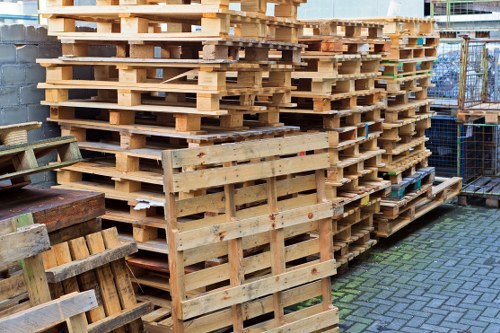
Good preparation can make your collection quicker and more efficient. It also helps ensure the right vehicle, equipment, and time are allocated to your job. Before your appointment, a few simple steps can save time and reduce stress on the day.
- Sort the items: Separate rubbish, reusable belongings, and anything you want to keep.
- Group waste together: If safe and practical, place items in one area to make loading faster.
- Check access: Make sure gates, entry points, and communal doors can be used at the agreed time.
- Reserve parking if possible: If your street has tight parking or permit restrictions, plan ahead where you can.
- Tell us about stairs or lifts: This helps us plan the right approach for the collection.
- Point out anything unusual: Mention heavy, fragile, or awkward items in advance.
If you live in a busy part of London, such as Hackney, Fulham, Clapham, Stratford, Ealing, Southwark, or Notting Hill, access planning can be especially important. Roads can be narrow, parking may be limited, and collections may need to be timed carefully to avoid congestion or disruption. A little preparation goes a long way.
Tip: If the waste is in a cellar, loft, garage, or shared storage area, it helps to let us know beforehand so we can plan the lifting and carrying safely.
Pricing factors to consider
Every collection is different, so pricing is normally based on practical factors rather than a fixed one-size-fits-all amount. Customers often want a clear explanation of what affects the quote, and that is fair. Being upfront about the main cost drivers helps you compare options and choose the right service for your situation.
The most common pricing factors include the volume of waste, the type of items, how much labour is needed, how easy it is to access the property, and whether the job needs special timing. A small bag collection in an accessible street is very different from clearing several bulky items from a top-floor flat with no lift. Likewise, a commercial collection from a loading bay may be more straightforward than a collection from a property with limited parking and multiple flights of stairs.
Other factors can include whether the waste is mixed, how long loading is expected to take, and whether the collection needs to be arranged urgently. If you are unsure about the likely scope, the easiest next step is to ask for a quote with a clear description of the items involved. That helps ensure the service is tailored to your needs rather than estimated blindly.
Who uses council rubbish collection alternatives in London?
Many different customers use local rubbish collection services, and their reasons vary. In London, the service is not just for one type of property or one type of waste. It is used by private residents, landlords, estate managers, shop owners, tradespeople, and office managers who need a practical solution.
- Homeowners clearing out lofts, sheds, garages, and spare rooms
- Tenants moving out and needing bulky items removed quickly
- Landlords and letting agents preparing properties between tenancies
- Businesses disposing of office furniture, stock, or packaging waste
- Trades and refurb teams managing non-hazardous renovation debris
- Estate and property managers dealing with communal or vacant unit waste
Each customer group has different priorities. Some need speed. Others need discretion, flexible timing, or help navigating building access. A good local service takes those differences seriously and works to make the collection as simple as possible.
Areas covered across London
We cover a wide range of London neighbourhoods and boroughs, including central, north, south, east, and west areas. This includes busy urban districts as well as residential streets and mixed commercial zones. Examples of areas we regularly serve include:
- Central London locations such as Westminster, Holborn, and the Strand area
- North London areas such as Camden, Islington, Haringey, and Barnet
- South London areas such as Lambeth, Southwark, Lewisham, and Wandsworth
- East London areas such as Tower Hamlets, Newham, Hackney, and Barking and Dagenham
- West London areas such as Hammersmith and Fulham, Ealing, Brent, and Kensington and Chelsea
If you are based in a nearby district not listed above, it is still worth getting in touch. London collections often depend more on access and waste type than on postcode alone. We aim to support customers across the capital wherever practical.
Why choose a local company for rubbish collection?
Choosing a local company for council rubbish collection support in London gives you practical advantages. Local teams understand the streets, traffic patterns, parking limitations, and common property layouts that affect collection jobs. That can make communication easier and reduce the chance of avoidable delays.
There is also a customer-service benefit. When you need waste removed, you usually want a simple answer quickly: what can be taken, when can it be collected, and what do you need to do before the appointment? A local service is often better placed to respond to those questions clearly and to adapt if the property has unusual access or if your plans change.
For many London customers, the biggest advantage is convenience. Instead of trying to fit a council timeslot into an already busy week, you can arrange a collection around your own schedule. That matters for families, shift workers, landlords with multiple properties, and businesses trying to stay open while keeping premises clear and tidy.
Frequently asked questions
Can you collect items if my council service will not take them?
Often, yes. Many customers contact us because their local council service has limits on collection size, item types, or booking availability. If the waste is non-hazardous and suitable for collection, we can usually help assess the job and advise on the next step.
Do I need to move the waste outside before collection?
Not necessarily. In many cases, waste can be collected from inside the property, a garden, basement, garage, or communal area, depending on access and the arrangement made in advance. Let us know where the items are located so the job can be planned properly.
What if I live in a flat with no parking nearby?
That is very common in London. Tight parking, controlled zones, and shared entrances are part of normal city access conditions. When you request a quote, mention the parking situation so the collection can be organised with that in mind.
Can you help with mixed waste after renovation or decorating?
Yes, as long as the waste is non-hazardous and suitable for a regular collection. Mixed loads are common after small refurbishments, decorating projects, and office updates. It helps to describe the materials beforehand so the right approach can be used.
How far in advance should I book?
As soon as you know the waste needs removing, it is best to enquire. Some collections can be arranged quickly, while others need more planning because of access, volume, or timing. Early booking is especially useful in busy areas of London or when a property handover deadline is approaching.
Can businesses arrange regular collections?
Yes. Many commercial customers need occasional or regular rubbish collection support. This can be useful for shops, offices, hospitality venues, and managed properties that generate waste beyond what ordinary bins can reasonably handle.
What should I do if I am not sure whether an item can be collected?
List the item when you request a quote and include a photo if possible. That helps determine whether the item can be included and whether any special handling is needed. It is always better to check first than to assume.
Practical benefits for customers
The main benefit of using a proper local rubbish collection service is simplicity. You save time, reduce lifting and carrying, and avoid the frustration of trying to fit waste removal around council limitations. For many London customers, the service also prevents clutter from building up while keeping homes and businesses safe and presentable.
Other common benefits include:
- Less stress during moving, renovating, or clearing out
- Help with items that are too large for normal bins
- Support when access or parking makes self-disposal difficult
- Faster turnaround for urgent property changes
- A more organised and tidy finish after collection
If you are dealing with a deadline, a busy household, or a property that has to be ready for the next occupant, this kind of service can make a real difference. Contact us today to discuss your needs and arrange a convenient collection time.
When council rubbish collection is not enough
There are times when council rubbish collection is perfectly adequate, especially for routine household waste within the rules of your borough. But there are also times when it is simply not enough. You may have more waste than the council will take, too many bulky items, a deadline that cannot wait, or a property layout that makes self-managed disposal impractical.
In those situations, a local rubbish collection service provides a more flexible answer. It bridges the gap between ordinary bin collections and larger clearance projects. That is especially useful in London, where household and business needs vary widely, and where even a small removal job can become complicated because of stairs, parking, and traffic.
If your waste has started to affect day-to-day life, do not leave it to build up further. A quick enquiry can help you work out the best solution and avoid a bigger clearance job later. Book your service now if you want a practical way forward without the uncertainty.
Final thoughts
Reliable council rubbish collection in London support is about more than simply moving waste away. It is about understanding the realities of local properties, borough rules, access limitations, and the pace of life in the capital. Whether you are a homeowner, tenant, landlord, or business customer, the right collection service can save time, reduce disruption, and make a difficult task feel manageable.
If you need help clearing unwanted items from a London property, or if the council’s usual service does not fit your situation, we are ready to help. From single-item removals to larger clear-outs, we aim to provide a practical and local solution that works for your schedule and your space. Request a free quote today and take the first step toward a cleaner, clearer property.