020 3875 4109
 020 3875 4109



Complete guide to sorting domestic rubbish for recycling
Posted on 13/08/2026
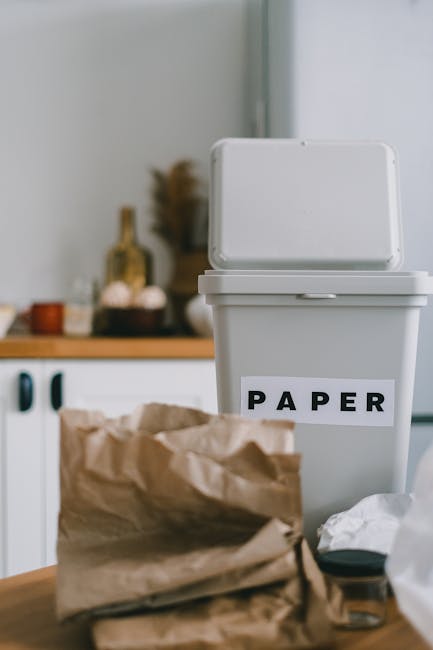
If your kitchen caddy, main bin, and recycling box sometimes feel like three slightly different versions of chaos, you are not alone. Sorting domestic rubbish for recycling sounds simple until you're standing at the sink with a yoghurt pot, a greasy pizza box, and a charger cable wondering what goes where. This complete guide to sorting domestic rubbish for recycling breaks it all down in plain English, so you can build a routine that actually works at home, saves time, and keeps more waste out of the wrong bin.
The goal here is not perfection. It's a practical, realistic system you can use on a busy weekday evening, when the dinner smells are still in the air and nobody has the patience for a complicated waste lecture. Let's make it easier.
Why Complete guide to sorting domestic rubbish for recycling Matters
Sorting domestic rubbish properly matters because the success of recycling starts at home. If recyclable items are contaminated with food, liquids, or non-recyclable materials, they can become harder to process and may be rejected. In everyday terms, that means a bin that looks like recycling can still end up being treated like waste. Bit annoying, really, but also fixable.
There's another side to it too. Good sorting reduces the amount of general household rubbish you throw away, which often means less smell, less mess, and fewer overflowing bags waiting by the door. It also makes collection days smoother, especially in smaller homes, flats, shared houses, or busy family kitchens where waste builds up fast.
For many households, the challenge is not intention. People want to recycle. They just don't always know what belongs where. That's why a clear, repeatable sorting system is so useful. Once you know the pattern, you stop second-guessing every item.
If you're decluttering at the same time, it can help to think about the broader flow of items leaving the home. Some readers also find it useful to pair recycling habits with a calmer decluttering routine or simple ways to cut household waste, because the two things naturally support each other.
How Complete guide to sorting domestic rubbish for recycling Works
At a basic level, household waste sorting works by separating items into different streams before they go out for collection or disposal. The exact categories vary by council, so there is no one-size-fits-all setup across the UK, but the logic is usually similar:
- Dry recycling such as cardboard, paper, tins, cans, and certain plastics
- Food waste where a separate collection exists
- General waste for items that cannot be recycled through your local system
- Special waste streams for items such as batteries, electricals, textiles, or household hazardous materials
The key is to keep each stream clean and separate. In practical terms, that means rinsing off food residue where needed, flattening cardboard, and avoiding the "I'll just chuck it in for now" habit. That habit is the quiet troublemaker.
Some homes do best with one recycling box and one general bin. Others need a more detailed setup with labelled containers under the sink, a separate bag for soft plastics, and a small caddy for batteries and chargers. The best system is the one you'll actually use after a long day, not the one that looks neat in a magazine photo.
If you are dealing with a larger clear-out or a build-up of mixed household items, a broader waste plan can help. Services such as rubbish collection and house clearance can be useful when the volume is simply too awkward for normal weekly bins.
Key Benefits and Practical Advantages
There are plenty of reasons to get your sorting routine in shape, and most of them are very everyday, very relatable.
- Less contamination: Your recycling is more likely to be accepted if it is sorted properly.
- Faster bin day routines: You spend less time standing around making decisions at the last minute.
- Cleaner kitchen space: Fewer mixed waste smells, less clutter, and less bin overflow.
- Better use of storage: Bags, boxes, and containers become easier to manage when every item has a place.
- Lower landfill dependence: More material is kept in the recycling stream where possible.
- Less stress: This sounds small, but a tidy waste routine removes one of those background annoyances that quietly drain energy.
There is also a practical financial angle, even if it is indirect. When your household waste is reduced and sorted better, you may avoid extra trips, overflowing bins, or emergency last-minute disposal fixes. Nobody enjoys paying for panic.
For families, shared houses, and time-poor households, the biggest advantage is consistency. A simple system gets everyone in the house on the same page. Once that happens, recycling stops feeling like a chore and starts feeling like muscle memory.
Who This Is For and When It Makes Sense
This guide is useful for almost any home, but it becomes especially helpful in a few common situations:
- Busy households where waste builds up quickly after school, work, and meals
- Flat shares where different habits can cause confusion
- New movers learning local bin rules for the first time
- People downsizing and trying to avoid waste during a move
- Households doing a clear-out after months of clutter building up
- Anyone trying to lower plastic waste or improve home recycling habits
It also makes sense if you have a few awkward items in the home that never seem to fit the usual bin routine. Old chargers, broken pots, worn clothing, and packaging from online orders all have slightly different disposal paths. Sorting them properly is a small effort with a surprisingly noticeable payoff.
If that sounds familiar, a few related articles can help you tackle the trickier bits, such as ethically disposing of outdated chargers, recycling old clothes, and proper pot and pan recycling.
Step-by-Step Guidance
Here's a straightforward way to sort domestic rubbish for recycling without making your kitchen look like a sorting depot. Truth be told, it only takes a little structure.
1. Start with a quick waste audit
Before you buy any bins or labels, look at what your household throws away over a few days. Are you mostly dealing with cardboard, food packaging, glass, drinks cans, and food scraps? Or is your issue more about awkward items like batteries, mixed plastics, and electricals? Knowing the mix helps you design the right setup.
2. Set up your main categories
In most homes, it helps to create these core streams:
- Recycling
- General waste
- Food waste
- Problem items such as batteries, small electricals, lightbulbs, and textiles
Use containers that suit your space. Under-sink caddies, stackable boxes, tote bags, or slim bins can all work. Don't choose something so large that it encourages lazy sorting.
3. Clean items lightly where needed
You do not need to scrub every container until it shines. That would be unrealistic. But food residue, grease, and liquid can cause problems, so a quick rinse or wipe is often enough. If an item is heavily soiled, it may need to go in general waste instead.
4. Flatten and separate packaging
Cardboard boxes, cartons, and large packaging should be flattened where possible. Separate materials if your local guidance asks for it. For example, a plastic film window and a cardboard sleeve may need different handling depending on the collection system.
5. Keep non-recyclables out
This is the part that saves the most headaches. If an item is coated, mixed with multiple materials, or contaminated beyond a quick clean, it may not belong in recycling. Put it aside rather than guessing. Guessing is how recycling loads get messy.
6. Create a "special items" basket
Have a small box or bag for odd bits: dead batteries, cables, broken pens, blister packs, and other items that are too awkward for the main bin. You can deal with them in one go instead of making a decision every time.
7. Match your system to collection day
A tidy routine is easier if it fits your weekly rhythm. Some households sort on the evening before collection; others empty all indoor containers on Sunday afternoon. Pick a regular time, and keep it boring in the best possible way.
8. Review what goes wrong
If your recycling bin keeps getting contaminated, look for the pattern. Is it always greasy cardboard? Soft plastics? Mixed packaging from takeaways? A small fix in one category often improves the whole system.
Expert Tips for Better Results
A few practical habits make a big difference once the basics are in place.
- Use labels that match real life. "Paper", "plastic bottles", "metal", and "food waste" are clearer than clever wording.
- Place bins where waste is created. If recycling happens in the kitchen, keep the main containers there, not in a distant utility room.
- Keep a small cleaning cloth nearby. One quick wipe after sorting prevents sticky build-up. Tiny thing, huge payoff.
- Don't overfill recycling containers. Loose items are easier to sort than compressed bundles with unknown leftovers inside.
- Build habits around convenience. If a system feels awkward, it will probably collapse after a week.
- Be careful with "wishcycling". That means putting something in recycling because you hope it can be recycled. It's well meant, but often unhelpful.
One useful real-world observation: the most successful households usually do not have the most bins. They have the clearest habits. There's a difference.
If you're already trying to reduce clutter, a few related reads may help, including minimalist practices at home and home tips that prevent waste.
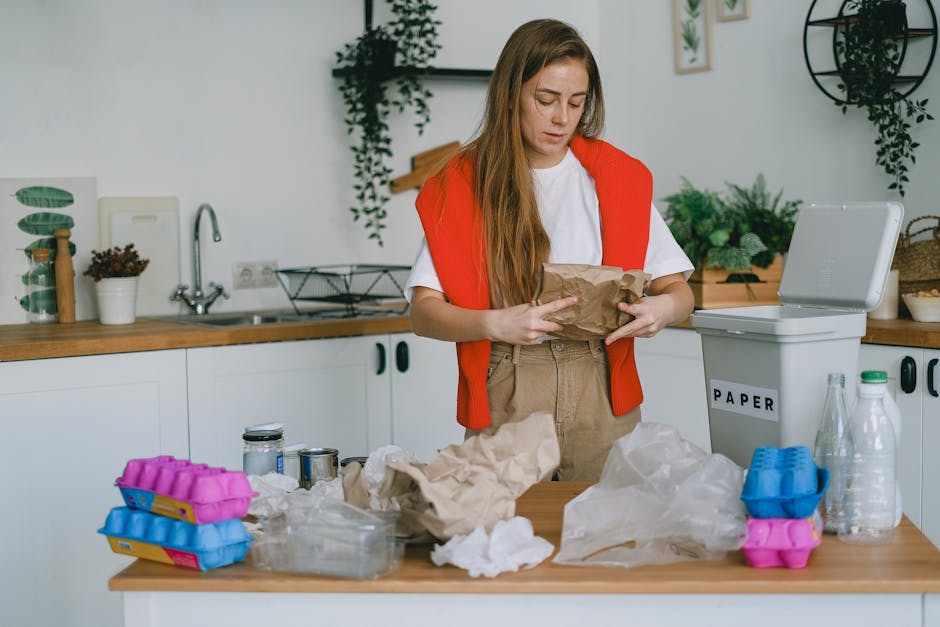
Common Mistakes to Avoid
Most recycling problems come from the same handful of mistakes. Once you know them, they're much easier to dodge.
- Putting food-soaked items in recycling: Greasy cardboard and food-laden containers can contaminate loads.
- Mixing all plastics together: Not every plastic item belongs in the same bin, and some may not be accepted at all.
- Ignoring local guidance: Collection rules vary, so what works in one area may not work in another.
- Recycling broken items without checking first: Some broken products are still recyclable, but not always through the kerbside bin.
- Letting special waste pile up: Batteries, chargers, and small electronics should not drift into general waste out of convenience.
- Assuming "clean enough" is always clean enough: A little residue may be fine; heavy contamination usually is not.
There's also the habit of stuffing everything into one sack and sorting it later. It feels efficient at the time. Then the bag sits there for a week and the logic disappears. We've all done it at least once.
If you're unsure about specific waste types, it can help to read more about plastics you should avoid and the microplastic problem, because those topics overlap with household plastic sorting.
Tools, Resources and Recommendations
You do not need a fancy setup to sort domestic waste well. A few simple tools go a long way.
| Tool | What it helps with | Best use |
|---|---|---|
| Labelled bins or boxes | Clear separation of waste streams | Kitchen, utility room, garage |
| Small caddy | Food waste or scraps | Near the prep area |
| Rinse bowl or sink space | Quick cleaning of containers | After meals, before collection day |
| Storage tub for special items | Batteries, cables, chargers, bulbs | Hall cupboard or utility space |
| Handheld shredder or paper bag | Paper and confidential household documents | Home office |
Useful habits matter just as much as tools. For example, flatten cardboard before it goes out. Keep soft plastics separate if your local system asks for it. Store odd items together so they do not vanish into random drawers. That last one is a lifesaver, honestly.
If your home is full of leftover packaging after deliveries, you may also find cardboard and packaging disposal tips especially helpful. And if you are doing a larger household refresh, efficient waste clearance services can be a practical backup for bulkier loads.
Law, Compliance, Standards, or Best Practice
For domestic households in the UK, the most sensible rule is simple: follow the waste and recycling guidance issued by your local council or collection provider. That may sound obvious, but it matters because collection rules are not identical everywhere. One area may accept a material kerbside while another may not.
Best practice usually means keeping recyclables as clean and uncontaminated as reasonably possible, separating hazardous or special waste from everyday rubbish, and never placing items out for collection if you are unsure they belong there. If something is hazardous, sharp, or potentially dangerous, treat it carefully and keep it away from routine household bins.
Some items need a more cautious approach, especially if they relate to safety, chemicals, or personal protection equipment. If that's your situation, see safe PPE waste disposal guidance and what counts as hazardous waste for a more careful overview.
If you are ever unsure, the safest practical rule is: do not guess with mixed or questionable waste. Separate it, store it safely, and check the local guidance before putting it out. That's the grown-up answer, even if it's not the flashiest one.
Options, Methods, or Comparison Table
There are a few common ways to handle domestic recycling. The right one depends on how much space you have, how many people live in the home, and how complicated your waste stream is.
| Method | Best for | Pros | Trade-offs |
|---|---|---|---|
| Single-bin sorting at the point of disposal | Small households, simple routines | Fast and easy to maintain | Can become messy if everyone guesses differently |
| Multi-container kitchen system | Families, busy homes | Clear separation, fewer mistakes | Needs a little more space |
| Weekly batch sorting | People short on time | Convenient, fits busy schedules | Can lead to temporary clutter |
| Special-items box plus normal bins | Homes with lots of chargers, batteries, and odd items | Keeps awkward waste under control | Still needs a separate disposal plan later |
In our experience, a hybrid setup is often the sweet spot. Use clear day-to-day containers for ordinary waste, then keep a small box for awkward items. It's simple, and it works. No drama.
Case Study or Real-World Example
A typical example is a two-bedroom flat with two adults, one child, and a kitchen that tends to collect everything all at once: takeaway boxes, packaging from deliveries, newspapers, and the occasional dead battery from a toy. At first, all waste went into one under-sink bin because it was easy. The result was a smelly mix of food waste, flattened cardboard that had not really been flattened, and random small items that never made it into the right stream.
After a simple reset, they changed three things. First, they placed a small recycling box by the kettle, because that's where most packaging appeared. Second, they added a small tub for batteries, cables, and electrical bits. Third, they started rinsing containers lightly as soon as they finished eating rather than waiting until the bin was already full.
The big improvement was not dramatic. It was quiet. The kitchen looked less chaotic, bin night became quicker, and the household stopped arguing over where things should go. Not glamorous, but very real. That's usually how better domestic recycling starts.
For households that are also clearing cupboards, wardrobes, or loft space, a gentle decluttering approach can make the recycling system more sustainable over time. A few useful starting points are effective clutter removal and long-term clutter control.
Practical Checklist
Use this before bin day or during a household reset.
- Check your local recycling guidance for accepted materials
- Empty and lightly rinse containers if needed
- Flatten cardboard boxes
- Keep food waste separate from dry recycling
- Set aside batteries, chargers, and small electricals
- Remove obvious contamination such as grease or leftover food
- Keep glass, cans, paper, and plastics in the correct containers
- Review whether anything should go to a special collection or separate disposal stream
- Empty indoor bins regularly before they overflow
- Reset the system once a week so it stays manageable
Expert summary: The best domestic recycling system is the one that is simple enough to repeat, clean enough to trust, and flexible enough to fit real family life.
If bin problems are part of your weekly routine, you may also want to look at what to do when bins are not emptied, especially if your household waste starts backing up through no fault of your sorting system.
Conclusion
Sorting domestic rubbish for recycling does not need to be complicated. Start with the waste you create most often, build a simple set of containers, and keep the routine realistic for your home. Once you stop treating recycling as a series of last-minute decisions, it becomes a calm, ordinary habit instead of a weekly headache.
The real win is not perfect sorting. It's steady improvement. One cleaner box, one fewer contaminated bag, one less mystery item shoved in the wrong place. That adds up, and you'll notice the difference in your kitchen, your bins, and your peace of mind.
Get a free quote today and see how much you can save.
And if your home is at the point where the waste problem is bigger than the recycling bin, that's okay too. Start small, keep it practical, and give yourself a bit of credit. A better system is built one ordinary day at a time.
 House clearance
 Rubbish collection